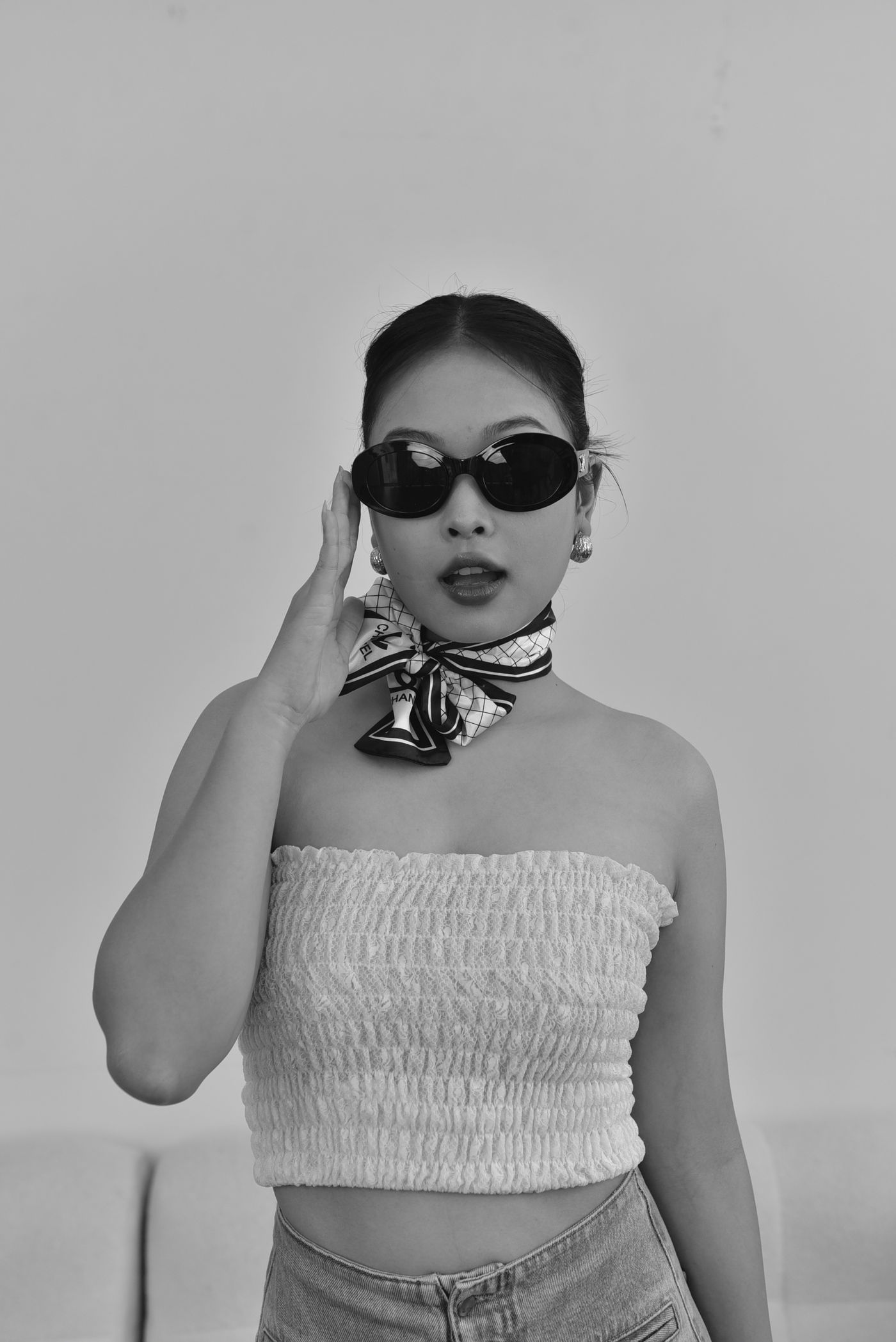
AT A GLANCE
Scarf dimensions make sense when they are connected to a real neckline, a preferred fold, and the amount of fabric you enjoy wearing. Learn how to compare small squares, larger squares, and long rectangles using simple measurements, outfit trials, and practical considerations that go beyond a product photograph or a familiar styling formula for everyday dressing.
Start with a wearing situation
The most useful scarf size is the one that behaves well in a situation you actually encounter. A small accent for an open shirt, a generous square beneath a coat, and a long draped rectangle solve different dressing problems. Choosing among them becomes easier when the first question concerns the outfit rather than the number printed on the product page. Think about where the fabric should sit, how much movement you want, and whether you prefer visible ends or a nearly concealed fastening.
You can begin with something you already own. Fold a familiar scarf into the arrangement you like and note where it feels too short, too full, or difficult to control. If no scarf is available, use a clean piece of lightweight cloth as a rough size reference. This will not reproduce silk's exact drape, but it can reveal how much area or length a proposed size occupies. Treat the trial as a sketch of proportion, then refine the choice with information about the actual fabric.
Read dimensions without assuming a standard
Scarf names such as small square, neckerchief, bandana, stole, and wrap are used differently by different brands. Some names describe a general shape, others suggest a styling convention, and none should replace stated measurements. A product called a small square by one seller may be close to another seller's medium size. Read both dimensions, check the units, and confirm whether the measurements include fringe, a decorative edge, or another extension that will not function like the main fabric.
Centimeters and inches are simply different ways to describe the same physical object. Convert the measurements if necessary before comparing two listings. Avoid relying on an approximate conversion remembered from another purchase, especially when a few centimeters could determine whether a particular fold leaves enough fabric to fasten comfortably. For a gift, record the stated size in the recipient's familiar unit. Clear measurements are more useful than an assurance that a style is universally flattering or fits everyone.
Squares offer several dimensions at once
A square has equal sides, but it does not present the same usable shape in every fold. Folding opposite corners together creates a triangle with a longer diagonal edge. Folding repeatedly into a narrow band produces a different amount of bulk and changes which portions of the print appear. This explains why two people can describe the same square as generous and compact: they may be using entirely different arrangements and looking at different parts of the design.
When considering a square, imagine at least two likely folds. In a triangular arrangement, consider the depth of the point across your chest. In a band arrangement, consider the width of the finished band and the amount of fabric accumulated inside it. You do not need a complicated calculation to see the difference. Lay out a measured paper square on a table, fold it, and compare its footprint with a shirt or jacket. Paper cannot predict the softness of the result, but it can make the geometry visible.
What a smaller square does well
A smaller square can provide a controlled patch of color near a collar without introducing a large textile area. It can be convenient when you want the shirt, jacket, or pendant to remain visually prominent. Its limited fabric encourages a relatively compact arrangement and may make a simple print border easier to isolate. For someone who dislikes adjusting flowing ends, this restrained footprint can be more appealing than the versatility promised by a much larger scarf.
The tradeoff is less available length and less freedom to experiment. A small square that looks elegant tied loosely on a display form may not leave enough fabric for your preferred arrangement over a substantial collar. Do not compensate by pulling it tightly. Consider a different fold or a larger size. Comfort should determine whether the scarf works, especially when sitting, turning the head, or wearing a coat over it. A pleasing photograph is not a reason to tolerate pressure or restriction.
Why a larger square feels different
A larger square provides more design area and more options for showing a central motif or broad border. It can spread across a shoulder, form a generous triangular panel, or fold into a substantial band. Those possibilities are useful when the scarf is intended to be a main visual element. They are less useful if most of the extra cloth must be hidden inside a narrow neckline that already feels crowded by a shirt collar and necklace.
Consider both exposed fabric and concealed fabric. A folded band made from a larger square can contain many layers even when it looks narrow from the front. That accumulation affects the knot, the way the ends fall, and the fit beneath outerwear. Ask for a photograph of the scarf in a folded arrangement rather than relying only on a picture of it hanging open. The folded volume is often more relevant to daily dressing than the dimensions of the unfolded textile.
Long rectangles prioritize directional drape
A long rectangular scarf can create a vertical line through its hanging fabric, while a broad rectangle can spread over a larger area. The length and width therefore need to be read together. A very long, narrow piece may be easy to arrange at the front of a jacket but offer little shoulder coverage. A shorter, wider rectangle may create more volume even though its longest measurement is smaller. Looking only at length can produce a misleading comparison.
Use your jacket opening as a visual reference. If you want two visible lengths of fabric at the front, check where they should end in relation to pockets, buttons, and a bag strap. Long ends may need more management in windy conditions or during movement. Avoid wearing loose fabric where it could catch in machinery, wheels, or other moving equipment. A scarf suitable for a seated dinner may be unsuitable for a practical task, and changing accessories is a reasonable part of dressing for the activity.
Fabric structure changes the same measurement
Two scarves of equal size can occupy different amounts of space when worn. Their weave, yarn, density, and finish influence folding and movement. The National Park Service's explanation of woven structures shows why the arrangement of threads affects cloth behavior. For a shopper, the practical consequence is simple: dimensions are essential information, but they are not a complete description of how much volume the scarf will create around a collar or inside a knot.
Request evidence of the actual textile. A short video showing the scarf being lifted, folded, and released can reveal more than a static photograph. Look at the thickness of a folded edge and the way the corners hang. Ask whether the scarf is intended to hold a defined shape or fall softly. These observations do not establish fiber authenticity, but they can help you understand handling. Match the behavior you can observe to the amount of structure you want in the outfit.
Use the neckline as a measuring frame
The same scarf can feel different with a crew neck, an open collar, a high neck, or a jacket lapel. Each garment creates a different frame and leaves a different amount of visible space. Before deciding a scarf is too small or too large, try it with the garment most likely to accompany it. A generous folded band may work well above an open neckline and feel cumbersome beneath a closely fitted collar. The accessory and garment need to be evaluated together.
A practical trial should include your normal movements. Sit at a table, reach gently for a bag, and turn your head. Notice whether the scarf shifts across a pendant, pushes against the collar, or becomes difficult to keep comfortably arranged. You are evaluating ordinary use rather than attempting to make the fabric motionless. Some movement is part of a scarf's character. The question is whether that movement remains comfortable and visually acceptable through the day without repeated tightening or readjustment.
Decide how much of the print should appear
Size affects the relationship between a design and the body, but the location of colors within the design can matter just as much. A large square with a quiet border may look restrained when folded into a band. A smaller square with a highly contrasting edge may produce a stronger accent. Ask to see the entire design and examine the corners that will remain visible in your preferred arrangement. An unfolded image should be treated as a map of styling possibilities.
If a particular motif is the reason for your interest, determine whether it will be visible when the scarf is worn normally. A central image may disappear inside a folded band, while the border becomes the dominant feature. Conversely, a broad triangular arrangement can display more of the center than a compact knot. There is no obligation to exhibit every part of a design at once. Choosing a scarf for a few well placed colors can be as considered as choosing it for an elaborate pictorial composition.
Jewelry changes the available space
A necklace occupies part of the same visual and physical area as a neck scarf. A generous scarf can surround a pendant attractively, but it can also conceal the pendant or push its chain into an uncomfortable position. Before choosing a size, identify which object should be most visible. If the pendant is the focal point, you may prefer a smaller textile arrangement or a scarf positioned farther from its path of movement. If the scarf leads, a simpler necklace may be easier to accommodate.
Check contact points carefully. A larger area of moving cloth has more opportunity to brush against clasps, textured settings, or raised engraving. This does not prohibit combining silk and jewelry, but it does reward deliberate placement. Test the combination with clean hands and avoid dragging the cloth across rough edges. A smooth scarf ring may offer another arrangement, but it should be suitable for the fabric and free of catching points. Extra hardware should solve a practical problem rather than introduce a new one.
Gift sizing should leave room for preference
A scarf does not require the same measurements as a fitted garment, yet its size still reflects personal preference. A recipient who enjoys a small collar accent may not welcome a large wrap, even if the larger piece seems more generous. Observe how the person dresses or ask an ordinary question about favorite scarf shapes. Information about a familiar neckline or preferred amount of fabric is more useful than assumptions based on age, gender, or the perceived formality of the gift occasion.
Choose a returnable option when uncertainty remains, and preserve its tags and packaging. Include the dimensions and care information with the gift rather than presenting the textile as effortless to maintain. If a design is meaningful, describe the documented connection accurately and avoid inventing a cultural story to make the gift feel more significant. Practical thoughtfulness can be expressed through a wearable size, a considerate palette, and the freedom to exchange the piece if another shape suits the recipient better.
A fitting trial before committing
When an online purchase arrives, check its condition and the seller's trial requirements before styling it. Spread the scarf on a clean surface, compare the dimensions with the listing, and inspect the edges without stretching them. Then try one or two intended arrangements with the actual outfit. Keep cosmetics, perfume, food, and rough accessories away during this evaluation. A careful trial protects both the fabric and your ability to discuss a genuine problem with the seller.
Write down what you learn. Perhaps the size is right but the folded volume feels excessive; perhaps a longer rectangle would suit your coat better than a square. Distinguishing size from fabric behavior prevents the next purchase from repeating the same mismatch. You are building a practical vocabulary around your own preferences. Over time, a few measurements associated with familiar folds become a more reliable guide than product categories that change from brand to brand or photographs styled for a different purpose.
Choose enough versatility, not unlimited possibility
A scarf can be versatile without supporting every arrangement shown in a styling video. The most useful piece may perform two familiar roles comfortably rather than offer a dozen elaborate knots you will never use. Decide which situations matter, check that the dimensions and cloth support them, and allow other uses to remain optional. This keeps the choice connected to your wardrobe and reduces pressure to buy a larger or more complicated piece merely because it appears more adaptable.
The final decision should feel specific. You know where the scarf will sit, how it will fold, what part of the design will appear, and how it will interact with nearby jewelry and clothing. Its measurements then become meaningful rather than abstract. Keep the care label and purchase record, wear the scarf in arrangements that remain comfortable, and reassess when your clothing changes. Good proportion is a relationship between objects and a person in motion; it cannot be guaranteed by a single supposedly ideal scarf size.
References & further reading
References provide background and further reading. Linked organizations do not endorse or certify this publication.
For general education. The identity, treatments, construction, and condition of an individual object may require professional examination. Our editorial approach.
Back to the beginning