AT A GLANCE
Lacquer terminology can describe a material, a technique, a finished object, or a broad visual effect. This guide helps readers interpret daqi, urushi, and English retail descriptions without treating related words as interchangeable guarantees. It considers translation, regional context, production claims, mixed materials, and the questions that turn an unfamiliar label into useful information about a contemporary piece of jewelry.
Ask what kind of information a word supplies
An unfamiliar craft term can seem more precise than it is in a particular listing. It may identify a material, refer to a family of techniques, describe a finished object, or evoke a cultural association. Before using the term to judge a piece of jewelry, ask what the seller intends it to communicate. A clear explanation is more useful than recognizing a word without understanding its role.
This is particularly important when descriptions move between languages. A short product title cannot carry every distinction that a maker might use in conversation. Translation may also compress several ideas into one familiar English label. The goal is not to demand a perfect glossary from every small studio. It is to obtain enough clarity to understand the actual accessory: what it contains, how its surface was produced, who made it, and what information remains uncertain.
Understand the breadth of English lacquer
In English retail use, lacquer can refer to more than one kind of coating. The word may appear in descriptions of traditional tree-derived material, other resin finishes, painted decorative objects, and products characterized mainly by shine. A glossy red or black surface does not resolve which meaning is intended. Neither does an appealing photograph of a workshop.
Ask whether the description refers specifically to natural tree-derived lacquer and whether other coatings are present. A contemporary maker may combine processes quite legitimately. The important point is that the combination should be described in a way that supports an informed choice. A buyer interested in a particular material should not have to infer it from atmosphere, color, or a phrase about ancient inspiration. A plain explanation of a mixed finish is more valuable than a prestigious-sounding label with no account of what it covers.
Place urushi in a material context
Museum and conservation sources use urushi in connection with East Asian tree-derived lacquer, including material from Toxicodendron vernicifluum. The term is Japanese, but its appearance in a product description does not independently identify where the finished jewelry was made. Material terminology and country of manufacture answer different questions.
For a contemporary accessory, ask the maker how the term applies to the piece. Does it identify the principal coating, a decorative stage, or a broader practice in the studio? Is the support wood, metal, or another material? A clear answer connects the word to the object rather than allowing it to stand as a general quality guarantee. Do not assume that a term associated with a particular craft history means that every accessory using it follows the same process, has the same care needs, or was produced by an individual with the same training.
Read daqi without turning it into a ranking
Daqi appears in Chinese lacquer contexts, while conservation literature may also use qi when discussing the material. These words should be understood through the description and source in which they occur rather than treated as marketing grades. A buyer does not need to decide that one regional term is inherently more authentic than another in order to appreciate the jewelry.
Ask for the original wording when a translation seems ambiguous, and request a plain explanation rather than attempting to settle every nuance from a romanized spelling. The relevant information is what the maker used and did. If a retailer cannot explain the term beyond repeating it, that limits the description's usefulness. It does not justify inventing a conclusion about the object. Choosing to seek more information or another piece is preferable to turning an unfamiliar word into an unsupported assurance of quality.
Keep regional traditions distinct
Lacquer has been used in multiple places and through varied practices. A broad reference to Asian lacquer can be useful at one level, but it should not erase the distinctions relevant to a particular object. A contemporary design may draw from one technique, collaborate across traditions, or use a material without claiming a traditional design lineage.
Look for specificity when cultural history is part of the sales story. Which practice is being referenced, and how does it relate to the accessory? An answer might concern a decorative method, training, or a documented source of inspiration. Avoid treating all red lacquer, all dark glossy surfaces, or all restrained shapes as expressions of one unified philosophy. A more precise account allows appreciation of differences and contemporary choices. It also prevents a wearer from repeating a cultural explanation that the maker never actually claimed.
Separate material names from technique names
A material can support many decorative approaches. Naming it does not explain whether a surface is painted, carved, inlaid, textured, or finished in another way. Conversely, a technique label needs an account of the materials used in this particular object. The two kinds of description should support each other without being collapsed into one word.
When reading a listing, make two mental columns: what is present and what was done. The first might include a support, coating, metal detail, and cord. The second might describe shaping, decoration, finishing, and assembly. Missing information becomes easier to identify when these questions are separated. A product can have a detailed technique description while leaving skin-contact metal unspecified, or a complete material list while saying little about the decorative method. Ask for the part that matters to your decision rather than assuming that one detailed passage answers everything.
Treat named decorative methods precisely
The Japan Kogei Association distinguishes several urushi techniques, including carved work and different forms of inlay or metal-powder decoration. Such names identify particular approaches; they should not be used simply because a modern accessory resembles a familiar museum object. A metallic-looking surface, for example, does not by itself establish the method by which the effect was achieved.
If a named technique influences the purchase, ask the maker to explain its use in ordinary language. The explanation need not reveal a private recipe or provide instructions for reproducing the work. It should clarify the relationship between the term and the finished piece. A retailer may need to consult the maker rather than improvise. That is a reasonable response. A confident but vague answer that treats several distinct methods as interchangeable provides less useful information than an honest request for time to confirm the detail.
Do not infer a process from color
Red, black, gold-colored, and multicolored effects can occur in different materials and processes. Color can be an important design choice without serving as an identification tool. A red carved-looking pendant is not automatically a particular historical type, and a black piece with bright details is not automatically made using the first traditional technique that comes to mind.
Describe the appearance separately from the claimed construction. You might like a dark reflective body with a small metallic accent regardless of how it was made, provided the description is accurate. If the process is central to your interest, seek direct information. Do not request scratching, burning, solvent application, or another home test as a shortcut. Such demonstrations can damage an object and still fail to establish the conclusion being claimed. Documentation and appropriate expertise are more useful than a dramatic visual test.
Read translated adjectives cautiously
Words such as pure, genuine, traditional, and natural may carry different implications in different retail contexts. They can also be translated loosely. Ask what a claim excludes or includes rather than assuming the adjective has a universally fixed meaning. Does natural refer to the coating, the support, the colorant, or the entire accessory? Does traditional refer to a process or merely a source of inspiration?
These questions are not pedantic when the answers affect care, value, or personal preference. They help a seller replace a broad reassurance with specific information. At the same time, avoid treating an awkward translation as proof of dishonesty. A small maker may communicate more clearly through a short follow-up than through a polished product title. Evaluate the final explanation and preserve it with the purchase record, so that the understanding reached in conversation does not disappear when the listing changes.
Include the hidden components in the vocabulary
A detailed surface description can distract from unnamed findings, supports, adhesives, or cords. Those parts still belong to the jewelry and may influence wear and care. The term urushi or daqi does not identify the metal in an earring post, the material of a pendant core, or the construction of a bracelet cord. Ask about each relevant component on its own terms.
This is especially important for a recipient with specific material requirements. A natural finish should not be presented as a guarantee that the complete accessory is universally suitable for sensitive skin. Equally, an attractive craft label does not establish that every component is made in the same workshop. A mixed production arrangement can be entirely reasonable when described clearly. Accurate vocabulary should make the whole object easier to understand, including the practical parts that are less visible in the sales photograph.
Preserve the maker's wording in records
Save the original description and any useful clarification rather than rewriting it from memory. If a maker says a design is inspired by a particular technique, keep that distinction. Do not shorten it later to made by that technique. If the material is described with a qualification, preserve the qualification when giving or reselling the piece.
This habit protects the object's history from gradual inflation. A tentative attribution can become an apparent fact after several owners repeat a simplified story. Contemporary jewelry benefits from accurate records just as older objects do, even when the record is modest. A receipt, product name, maker's explanation, and clear photographs may be sufficient for ordinary ownership. The aim is not to build a grand provenance around every accessory, but to keep what is known separate from what a later owner might understandably infer.
Use institutional sources for context
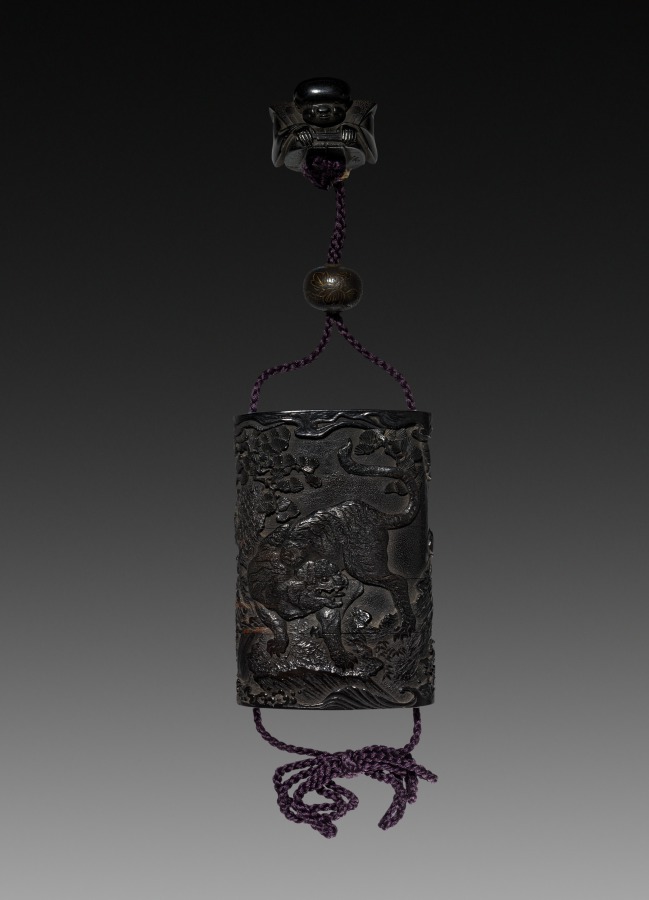
Museum, conservation, and craft-organization resources can help explain terminology, but they do not authenticate an unrelated retail object. A museum essay about carved lacquer describes the subject it addresses. Linking that essay beside a modern pendant does not prove that the pendant uses the same construction. The connection needs evidence from the object's own description and maker.
Use background sources to formulate better questions. They can reveal that a term has a specific technical meaning or that several methods exist within a broader craft. Then return to the accessory and ask how the relevant information applies. Avoid copying a historical account into a modern product story without establishing the relationship. Context is most useful when it sharpens understanding rather than supplies borrowed prestige. A contemporary piece can be appreciated for its actual process without being presented as equivalent to a museum example.
Ask a short set of clarifying questions
A concise message can resolve more than a long list of assumed conclusions. Identify the accessory and ask what the key term means in its description, what material supports the finish, and whether the named process is used directly or cited as inspiration. Add a question about care or skin-contact components if those details affect the purchase.
Give the seller room to answer in plain language. The buyer does not need to demonstrate expertise through specialized vocabulary. In fact, asking for an ordinary explanation can reveal whether the description is understood clearly. If the response remains circular, note the uncertainty rather than filling it with a favorable interpretation. A purchase can be declined because the information is insufficient without declaring the object fraudulent. The practical goal is a decision supported by enough accurate detail for the intended use and level of interest.
If the answer introduces another unfamiliar term, ask how it changes the practical description of the piece. This keeps the conversation focused and prevents a chain of technical words from replacing a simple explanation of what the accessory contains and how it was made.
Let terminology support appreciation
Learning craft vocabulary should make an object more understandable, not turn enjoyment into a test of how many unfamiliar words can be repeated. A useful term identifies something that matters: a material, a method, a historical context, or a maker's choice. When it is disconnected from those things, it becomes decoration in the description rather than information about the jewelry.
Choose pieces whose explanations are as coherent as their appearance. Keep cultural distinctions clear, allow uncertainty where it genuinely remains, and avoid converting a regional word into a universal quality certificate. Daqi, urushi, and lacquer can open an interesting conversation about material and making when they are used with care. The reward is not simply a more impressive label. It is a clearer relationship with the accessory, its creator, and the decisions that shaped the finished object.
References & further reading
- Getty: Lacquer Formulations
- Victoria and Albert Museum: What is lacquer?
- Japan Kogei Association: Urushi work
References provide background and further reading. Linked organizations do not endorse or certify this publication.
For general education. The identity, treatments, construction, and condition of an individual object may require professional examination. Our editorial approach.
Back to the beginning