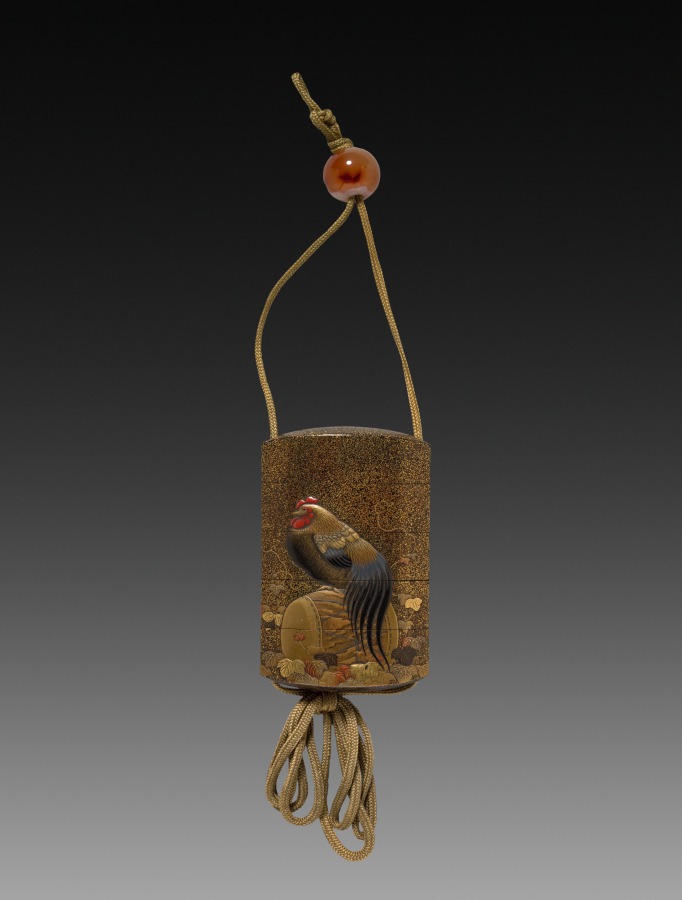
AT A GLANCE
A practical guide to caring for finished lacquer jewelry, with attention to delicate surfaces, mixed materials, storage, and changes that deserve professional assessment. Learn how to build a restrained routine, keep useful condition records, and avoid common cleaning experiments. The focus is on everyday decisions an owner can make without treating jewelry as a workshop project or assuming that every lacquer finish behaves alike.
Care begins with restraint
The urge to improve a treasured surface can cause more trouble than ordinary wear. A fingerprint invites rubbing, a dull patch invites polish, and a small chip invites a quick repair. With lacquer jewelry, the most useful first response is often to stop and identify what needs attention. A decorative object can contain a coating, preparatory layers, a core, metal findings, a cord, and adhesives. A method that suits one component may be unsuitable for another. Care should respond to this combination rather than to the word lacquer alone.
A restrained routine does not mean neglect. It means handling a piece thoughtfully, following its maker's instructions, and noticing changes before they become larger problems. The goal is to preserve an accessory that can be enjoyed, not to maintain an imaginary state of permanent newness. Minor signs of use and active deterioration are different things. Learning to distinguish them begins with knowing how the piece looked and felt when it arrived.
Preserve the maker's instructions
Save the care card, listing description, and any written answers provided by the maker or seller. These records may explain whether a finish is natural tree-derived lacquer, a mixed coating, or another decorative material. They may also identify a support that is hidden by the surface. Without that information, an owner can easily choose a cleaning method based on an incorrect assumption about the object.
If the instructions are vague, ask specific questions before there is a problem. Is routine wiping recommended? Should any moisture be used? Are metal parts intended to be polished separately? Is the piece suitable for prolonged skin contact, or are there particular limitations? A useful answer describes the finished jewelry rather than the general properties of a raw material. Keep the reply in a place that can be found later, especially if the accessory is given to someone else.
Establish a simple condition record
Photograph the front, reverse, edges, and attachment under even light when the piece is new to you. Include a view at normal scale and a closer view of any intentional texture or visible irregularity. The photographs do not need professional equipment. Their purpose is to create a reference that answers a later question: was this feature already present, or has something changed?
Write a short note if the surface is deliberately uneven, matte in selected areas, or decorated with raised details. Note how the pendant hangs and whether a finding moves freely. These observations make later assessment less dependent on memory. They also help a maker understand a concern from a distance. A report that a small edge has lifted since last month is more informative than a general statement that the finish looks wrong, particularly when supported by comparable photographs.
Make a safe place to put jewelry down
Care frequently fails during a hurried transition rather than during wear. An earring is left beside a sink, a pendant is placed on a crowded kitchen counter, or a bracelet is dropped into a bag with keys. Choose one clean, stable place for removal and use it consistently. A shallow tray with a soft, nonabrasive surface can make this habit easier, provided the piece is not exposed to sunlight or liquid there.
Avoid balancing jewelry on the edge of furniture or leaving it where a sleeve can sweep it onto the floor. Separate a pair of earrings so that their metal parts do not rest on the decorative faces. When several accessories are removed together, give each enough room. These ordinary arrangements often contribute more to preservation than purchasing a specialized cleaning product. A controlled place to set an object down prevents the accidents that no surface treatment can reliably undo.
Inspect before wiping
Before cleaning, look for loose material, lifting edges, a newly opened seam, or an insecure finding. Do not drag a cloth over a surface that appears to be flaking. A fiber can catch a raised fragment, and pressure can turn a local weakness into a larger loss. If the surface seems unstable, place the object in a protected position and contact the maker or an appropriate conservator for advice.
For a stable piece, follow the stated cleaning instructions using a clean cloth reserved for that purpose. A cloth previously used on metal polish or household products may carry residue even when it looks clean. Avoid assuming that softer always means safer: a fluffy fabric can snag textured decoration. Choose according to the maker's guidance and the shape of the object, and stop if the cloth catches or if the surface changes in an unexpected way.
Do not turn pressure into a cleaning method
A stubborn mark is not an invitation to rub harder. Increased pressure can affect high points, soften the appearance of a deliberate texture, or stress a vulnerable edge. Repeated polishing may also make a local area look different from the surrounding finish. If light cleaning does not produce the expected result, reconsider what the mark may be rather than escalating the force.
A darkened patch might be transferred material, a change in gloss, a designed variation, or a condition issue. Those possibilities call for different responses. Photograph the area, explain what happened before it appeared, and ask for advice. Include any product that touched the piece, such as hand cream or perfume. This history is more useful than a succession of home experiments that remove evidence and introduce new substances before a knowledgeable person has assessed the problem.
Keep cosmetics and household products separate
Jewelry is easier to manage when it is the last part of dressing and an early part of undressing. Apply cosmetics and fragrance before putting it on, and allow products to settle. Remove it before cleaning tasks, gardening, swimming, or other activities involving harsh contact or chemicals. These habits should be adapted to the individual piece and its maker's instructions, but they are sensible starting points when construction details are incomplete.
Do not spray fragrance onto a pendant as a way of scenting clothing, and do not use alcohol wipes to sanitize a lacquered surface without explicit suitable guidance. A mixed-material accessory can have vulnerable joins even if part of it appears resistant. The question is not whether a particular liquid affects every form of lacquer; it is whether that liquid is appropriate for this finished object, including its coating, support, decorative additions, and attachments.
Treat metal findings as separate components
An earring hook or pendant bail may need attention that the decorative body does not. Before using a metal polishing cloth, ask whether its treatment can contact the adjacent surface and whether the metal has an intentional patina or plating. A cloth designed to remove tarnish can be inappropriate for some decorative finishes. Do not wrap the entire object in it and rub indiscriminately.
If a clasp becomes stiff or a hook changes shape, avoid applying household lubricant or bending it repeatedly. Contact the maker or a jeweler who understands the mixed construction. Explain that the lacquer component must be protected during any work. A routine metal repair can still expose nearby decoration to pressure, tools, or heat. Good communication between owner and repairer is part of care, especially when the visible problem seems confined to a very small attachment.
Store pieces without forcing them to fit
A soft pouch is useful only when it leaves enough space and keeps components from rubbing. Stuffing a large pendant and several chains into a small bag creates repeated contact with every movement. A rigid compartment can offer better protection for raised decoration, but its lining and dimensions still matter. The object should rest securely without being squeezed or balanced on its highest points.
For earrings, consider how the posts or hooks are positioned. A metal tip should not press into the face of its partner. For necklaces, arrange the cord or chain so that its weight does not pull against a delicate opening. Storage should accommodate the design as it exists. If a favorite travel case requires the object to be bent, compressed, or forced under an elastic strap, choose a different case rather than asking the jewelry to tolerate the arrangement.
Choose a stable storage location
Direct sunlight, a hot car, a radiator shelf, and a damp bathroom are poor default storage choices for delicate mixed-material jewelry. Conservation organizations studying lacquer emphasize the role of light exposure and environmental fluctuations in deterioration. A homeowner does not need to reproduce a museum store, but can avoid locations that are obviously harsh or variable.
Do not improvise by putting wet cloths, humidifying packs, or strong drying agents inside a box unless advised for that specific situation. An attempt to control one environmental factor can create another problem. The condition of the support and other components also matters. A sensible domestic arrangement is a clean, shaded location with a reasonably stable environment and enough space for separate storage. If an important historic object needs more specialized conditions, obtain conservation advice rather than extrapolating from general jewelry tips.
Manage travel as a handling problem
Travel adds repeated packing, unpacking, security checks, and unfamiliar surfaces. Select the jewelry that suits the trip rather than bringing every valuable piece. Pack an accessory in a dedicated compartment, keep it accessible enough to remove safely when needed, and avoid placing heavy toiletries or electronics against its case. A well-padded case cannot protect an object if it is crushed by the rest of the luggage.
At a hotel, identify a safe removal place before the first evening. Bathroom counters are convenient but introduce water and the risk of dropping small parts into a sink. Keep the storage container in the same location so that departure does not involve a hurried search. After returning home, check the surface and findings before putting the jewelry away. Small travel-related changes are easier to address when they are noticed promptly and their likely cause is still remembered.
Respond carefully to chips and lifting areas
If a fragment detaches, do not discard it and do not glue it back immediately. Place it in a small separate container, label it with the object and date, and protect the main piece from further contact. Photograph the damaged area without manipulating the edge. A professional may find the fragment and the circumstances of the loss useful when considering a repair.
Avoid clear nail polish, household glue, colored pens, wax, or a cosmetic touch-up as a temporary solution. Such additions can change the appearance and complicate later work. A chip may expose several different layers, and a visually neat patch is not necessarily structurally appropriate. Ask whether the maker can repair the piece or recommend someone qualified. If the object is old, culturally significant, or of uncertain construction, a conservator's assessment may be more suitable than an ordinary decorative repair service.
Know when a change deserves attention
Not every mark requires restoration. A small stable scuff on a frequently worn object may be acceptable to its owner, while a loosening attachment or actively lifting surface needs prompt attention. Describe the practical effect of the change. Does a pendant now catch on clothing? Has an earring become unbalanced? Does a seam appear wider? These observations help distinguish an aesthetic preference from a developing mechanical issue.
Stop wearing a piece if a finding appears insecure or if fragments could be lost. Store it without pressure until advice is available. When seeking help, provide the original description, clear photographs, and an account of any cleaning or repair already attempted. Honest information is more useful than trying to present a pristine history. It allows the person assessing the jewelry to understand what may have affected the surface and to explain realistic options and limitations.
Build a routine that fits real life
A good care routine is short enough to be repeated. Put jewelry on after cosmetics, remove it before unsuitable activities, place it in a designated location, and store it separately. Check findings occasionally and keep the maker's instructions. These habits require little equipment and reduce the need for intervention. They also make it easier to notice a change because the piece is handled consistently.
The purpose of careful ownership is enjoyment with realistic expectations. Lacquer jewelry can be worn, appreciated, and connected to personal memories without being treated as indestructible or too precious to touch. Restraint keeps care proportionate. When a problem exceeds simple, documented instructions, asking a knowledgeable person is a useful action in itself. An object does not become better cared for because more products have been applied to it; it benefits when each action has a clear reason and an appropriate method.
References & further reading
- Denver Art Museum: The Craft and Care of East Asian Lacquer
- Canadian Conservation Institute: Care of Furniture Finishes
- Victoria and Albert Museum: Urushi conservation
References provide background and further reading. Linked organizations do not endorse or certify this publication.
For general education. The identity, treatments, construction, and condition of an individual object may require professional examination. Our editorial approach.
Back to the beginning