AT A GLANCE
Product photographs can reveal shape, detail, and construction, but they also reflect choices about light, angle, scale, and editing. Learn how to evaluate silver jewelry images, request the views that answer practical questions, and recognize what a photograph cannot establish. This guide helps remote shoppers connect attractive presentation with measurements, material descriptions, condition records, and a workable return process.
A photograph records an arrangement of conditions
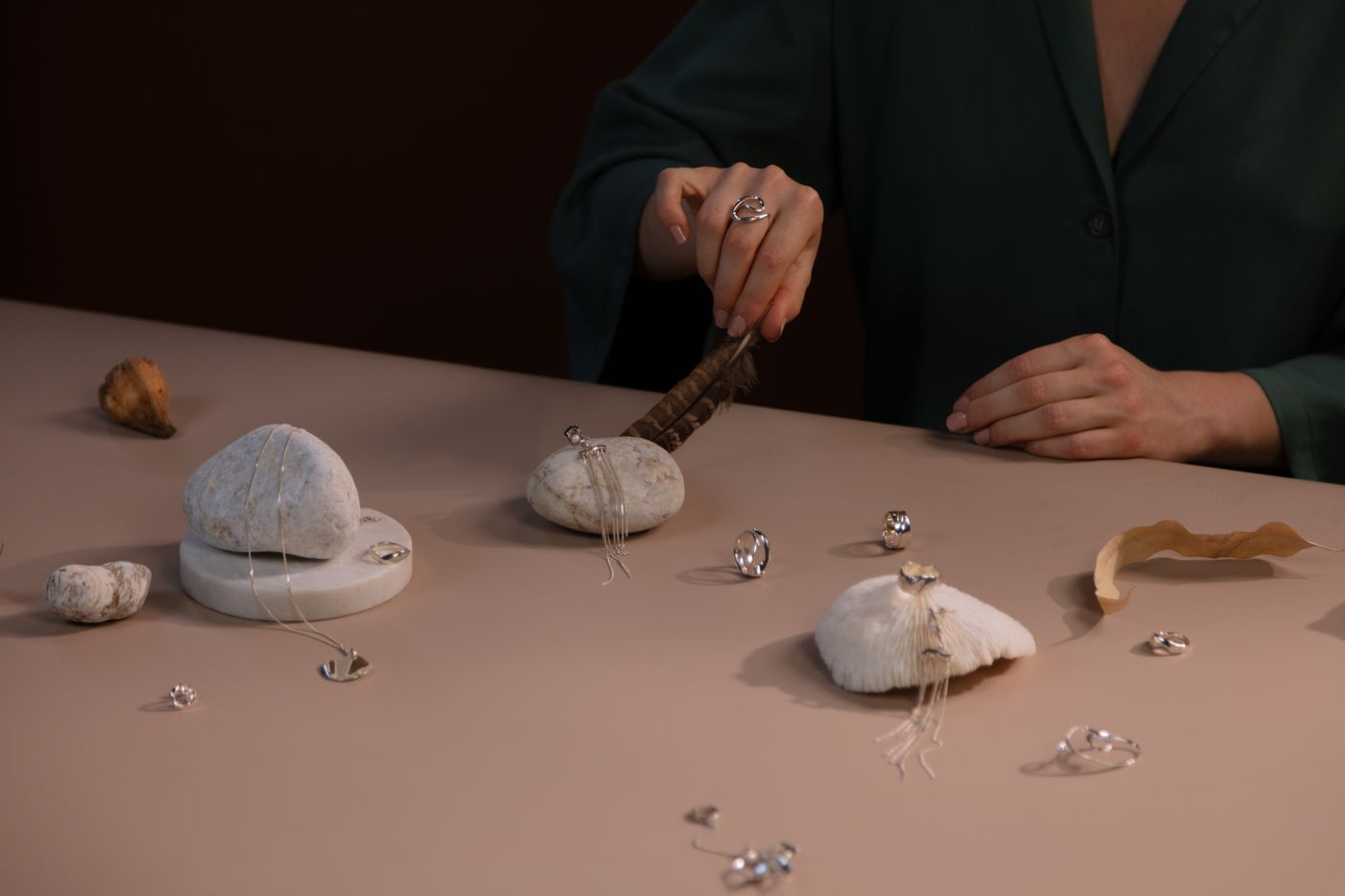
A silver pendant does not have one fixed photographic appearance. Its surface reflects the light, background, camera position, and nearby objects. A bright studio image may show a pale shape with crisp edges, while another view makes the same surface look dark or textured. These differences can occur without any change to the jewelry itself. Begin by treating the image as evidence created under particular conditions, rather than as a complete substitute for handling the object.
This does not make photography untrustworthy. Good images can communicate a great deal when their purpose is understood. They can show an outline, reveal a fitting, document a mark, or explain how a necklace sits with clothing. The useful question is what each image helps establish and what remains unanswered. A dramatic presentation view and a plain documentary view can both be valuable, but they should not be expected to perform exactly the same job.
Separate attraction from information
An image may first attract attention through a carefully arranged setting, a striking shadow, or a flattering crop. That is a legitimate presentation choice, but the scene may contribute more to your response than the object’s practical features. After the first impression, look for the jewelry itself. Can you see the whole piece, its suspension, its reverse, and the relevant closure? If the answer is no, identify the missing view rather than assuming that the atmosphere has supplied the information.
Ask yourself what you would still like about the piece against a plain background. The answer may be its shape, engraving, finish, or proportion. Those are useful reasons to continue investigating. If the appeal depends mainly on the surrounding fabric, model styling, or dramatic light, take more time. Remote shopping becomes easier when the emotional response and the factual assessment are allowed to coexist without one silently replacing the other.
Scale needs measurements outside the frame
A close-up can make a small pendant seem substantial and a delicate detail appear visually dominant. A full outfit image can make the same piece seem almost invisible. Neither view is sufficient for scale on its own. Read the stated dimensions and confirm whether they include the bail, projecting decoration, or chain fittings. The frame’s size on your screen is not a measurement. Zooming in reveals pixels and detail, not the object’s actual relationship to the wearer.
A ruler or familiar reference can help, provided it sits in a comparable plane and is clearly shown. A hand or model introduces useful context but varies in size and pose. For a pendant, a paper silhouette cut to the supplied dimensions can be a practical first check. It cannot reproduce weight, depth, or reflection, but it can reveal a mismatch between the scale you imagined and the scale the seller has actually specified.
Light can make polish look like color
Highly reflective silver may mirror a dark background and appear almost black in one area. A broad light source can make it look pale and uniform. Colored surroundings can introduce tones that belong to the scene rather than the metal. Before interpreting a dark patch as tarnish or a warm reflection as a material change, compare several views. A single photograph may not allow that distinction, particularly when the surface is curved and reflects different areas at once.
Ask for an ordinary-light view when the finish is central to the purchase. The goal is not a supposedly perfect neutral image that reveals every truth. It is a second set of conditions that helps you understand the range of appearance. A short movement view can also show how reflections travel across the form. That may be more informative than several nearly identical still images arranged to preserve the same flattering highlight.
Surface texture is sensitive to angle
Side lighting can emphasize fine relief, scratches, and engraved edges by creating contrast. Frontal diffuse light may make the same features less obvious. A textured pendant can therefore look deeply modeled in one image and relatively smooth in another. Consider the lighting before drawing a conclusion about depth. If tactile character matters, ask the seller to describe it in words and provide a side or angled view. A photograph can suggest a texture without establishing how it feels.
Editing can further influence the impression. Sharpening and contrast adjustments may make edges appear more emphatic, while smoothing can reduce visible marks. You do not need to assume that every image has been altered improperly. It is enough to recognize that a polished product photograph is a selected representation. Ask specific questions about the surface and condition rather than trying to infer an entire finishing process from the strength of a highlight.
The reverse can answer important design questions
Front views often receive the most attention because they show the motif or stone. The reverse can reveal how the pendant is supported, how deeply a setting projects, where marks appear, and whether an inscription is present. It also matters if the piece turns during wear. A pendant that is attractive only from one direction may disappoint if its suspension allows frequent rotation. Request the back as part of the complete object, not as an optional detail for unusually cautious buyers.
Side views help connect front and back. They can show a dome, a hollow-looking form, a raised setting, or the relation between a bail and the main body. These observations can prompt useful construction questions, but they should not become unsupported conclusions. A photograph may suggest that a piece is hollow or assembled without proving the exact method. Ask the seller to confirm the construction and save the answer with the specification.
A worn view explains placement, not universal fit
A necklace shown on a person can help communicate how it relates to a neckline and how its chain drapes. However, the model’s proportions, clothing, pose, and chosen length all affect the result. The same necklace may rest differently on you. Check the chain length and whether an extender or styling adjustment was used. A photograph does not make a measurement unnecessary, especially when a small difference determines whether a pendant sits inside or across a collar edge.
Observe whether the image shows ordinary movement or a carefully held position. A pendant can be centered by hand for a still photograph without remaining there during wear. If turning or balance matters, ask for a brief movement view or an explanation of the intended orientation. This is a practical compatibility question, not a demand that jewelry remain perfectly still. You want to understand the object’s behavior rather than mistake a staged moment for its permanent resting state.
Condition photographs need consistency
For secondhand jewelry, request views that show the actual object and the areas where wear is likely to matter. A polished front does not reveal a worn bail, a repaired chain end, or a clasp that operates poorly. Images should be supported by a written condition description. Ask whether any component has been replaced and whether the piece was recently cleaned or refinished. A bright surface can be attractive without establishing that the object is structurally sound.
If comparing before-and-after images, consider whether the light, angle, and scale are similar. A change in presentation can exaggerate or conceal a surface difference. Keep the original files when documenting your own piece, and include an overall view so that details remain connected to the correct object. A clear condition record is more useful than a collection of dramatic close-ups whose location and orientation become difficult to identify later.
Marks can be photographed without being authenticated
A close image of a stamp can help someone read its visible elements. It does not independently establish that the mark is genuine, that it applies to every component, or that the object has never been altered. A modern marked clasp can be attached to an older pendant. A worn symbol can be misread. Use the image as part of a broader inquiry involving the whole object, the relevant marking system, and available documentation.
Avoid asking a seller to improve a mark by aggressive polishing or scraping merely to obtain a clearer photograph. Light direction and magnification may help without changing the surface. If the mark remains uncertain, an appropriate professional can assess it. The most useful image preserves evidence, even when that evidence is incomplete. A visually sharpened or physically altered impression is not necessarily a more reliable basis for interpretation than a carefully documented worn one.
Photographs cannot supply composition on their own
A pale metal surface is not a complete identification of sterling, silver plate, or another construction. Weight impressions, reflected color, and a visible number do not resolve every material question. Request the seller’s clear specification and appropriate supporting information when needed. If composition materially affects the purchase, consider suitable independent assessment. A photograph can help you locate a question, but it should not be asked to perform a test it cannot carry out.
The same principle applies to stones and other materials mounted in silver. An attractive green cabochon does not establish its mineral identity, treatment, or origin. A wooden bead’s grain does not provide a complete species or sourcing record. Keep the visual description separate from the identification claim. This lets you appreciate the image while recognizing which statements need a different kind of evidence, rather than allowing beauty to turn uncertainty into confidence.
Representative images need a defined relationship to the order
Some listings show the exact piece; others show a sample from a repeatable design. Ask which applies. Variation may be expected in individually finished surfaces, carved details, natural materials, or custom work. The seller should explain the range rather than using uniqueness as a reason to leave every feature undefined. If a particular arrangement matters to you, request the actual item’s image before purchase or agree on an approval stage for a commission.
Also check that the selected option matches the photographs you are using. One listing may include different chain lengths, finishes, pendant sizes, or material combinations. A title can remain the same while the ordered variant changes important details. Save the selected specification and any confirmation image. This record is more useful than relying on the general listing after it has been updated to show another version or after the original product page has disappeared.
Ask for the view that answers the question
Specific requests are easier to fulfill than asking for more photographs without explanation. If you need to check chain compatibility, ask for the bail opening and the relevant end fitting. If you are concerned about depth, request a side view with dimensions. If the reverse may touch skin, ask for its finish and profile. Connecting each image to a practical question reduces unnecessary exchanges and helps the seller provide useful evidence rather than another attractive view of the same front surface.
Be realistic about what the image can settle. A close view of a clasp can show its form but not guarantee long-term reliability. A model photograph can show placement but not prove your comfort. Pair the visual information with measurements, construction descriptions, and service terms. Remote assessment works best as a combination of evidence, not as a contest to extract every possible conclusion from one medium.
Preserve a workable decision process
Before buying, check the return conditions, especially for personalized or altered items. The ability to assess fit and handling after delivery is valuable because some qualities cannot be established remotely. Inspect the supplied piece before cleaning, modifying, or wearing it beyond the seller’s conditions. Compare it with the exact order details and document any discrepancy clearly. A factual description of a mismatched dimension or missing component is more useful than a general claim that it looks different.
Keep expectations grounded in the range of appearance shown across the evidence. Reflective metal will continue to change with light and surroundings. A good purchase does not need to reproduce one studio highlight permanently. It should match the agreed materials, dimensions, construction, finish, and condition. That distinction allows normal visual variation without excusing a real difference between what was represented and what was supplied.
Read images as part of an understandable object
Jewelry photography is most useful when it makes a piece easier to question and understand. A strong set of images can reveal form, explain connections, and document detail while leaving clear space for written specifications and appropriate verification. The aim is not to distrust every beautiful photograph. It is to recognize its purpose and limits, then request the additional evidence needed for the decision you are making.
Look beyond the first impression, compare several conditions, and connect each visual observation with a concrete question. A pendant can remain appealing after you learn that its shine depends on light or that its apparent scale came from a close crop. What matters is whether the complete object suits your expectations once those effects are understood. Photographs can open that conversation very well, provided they are allowed to be images rather than promises about qualities they cannot independently establish.
References & further reading
References provide background and further reading. Linked organizations do not endorse or certify this publication.
For general education. The identity, treatments, construction, and condition of an individual object may require professional examination. Our editorial approach.
Back to the beginning