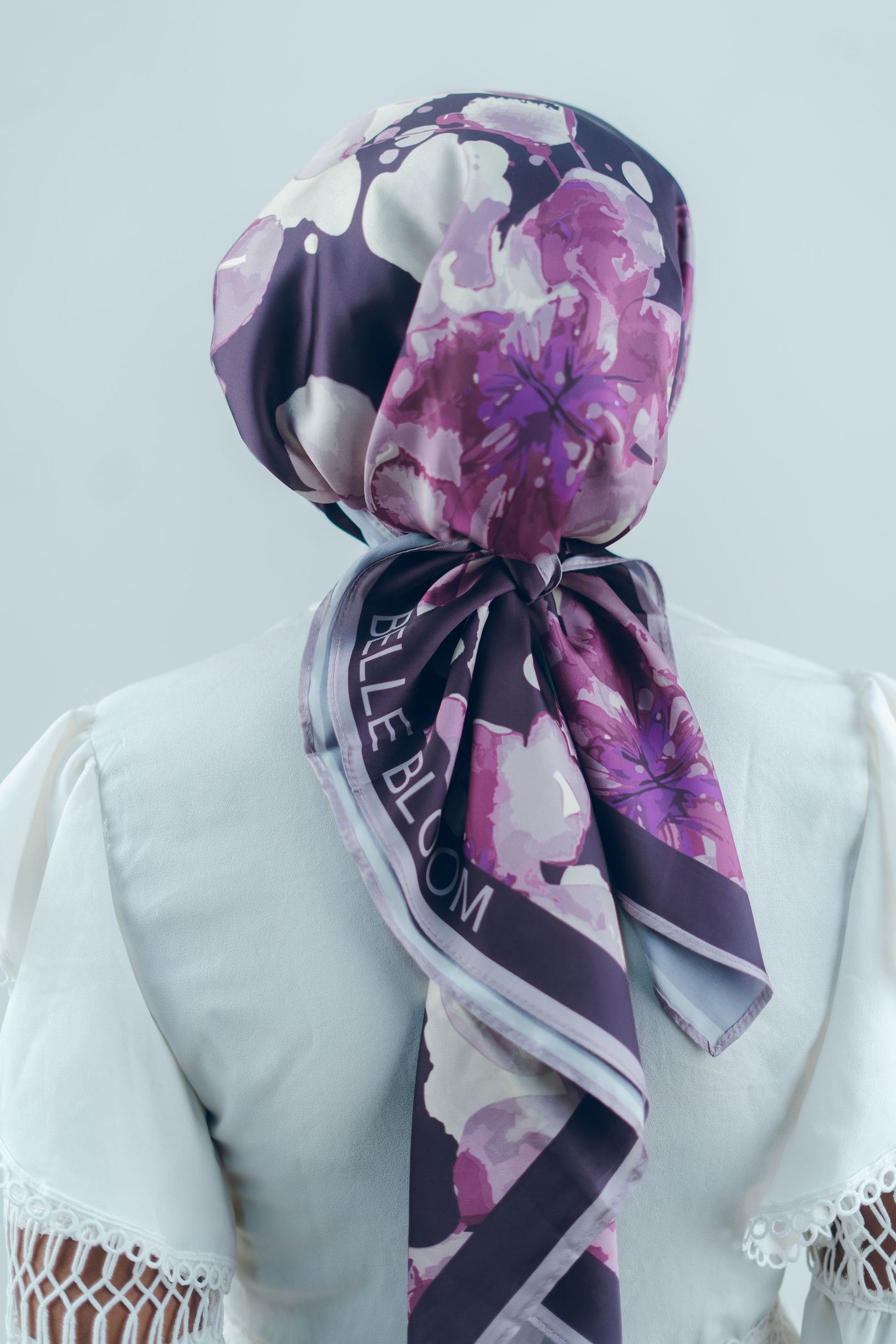
AT A GLANCE
A scarf edge is both a finishing detail and a working part of the textile. This guide explains how to inspect rolled hems, machine stitching, corners, tension, and small irregularities without turning one construction feature into a universal quality test. It also covers online photographs, condition questions, repair discussions, and the difference between process claims and observable workmanship.
Look beyond the center of the design
The center of a silk scarf usually attracts attention first. Its colors and imagery can dominate a product page, leaving the edge as a narrow detail around the outside. Yet the edge is part of nearly every wearing arrangement. It frames the visible design, shapes a corner, and helps determine how the cloth sits when folded. Examining it can reveal useful information about condition and workmanship, provided the observations remain specific rather than becoming a simplistic test of luxury.
A hem is not a complete biography of the scarf. It cannot establish fiber composition, the source of the design, every production stage, or authenticity by itself. A beautifully finished edge can appear on cloth with different material contents, and a damaged edge can occur on an otherwise carefully made textile. The useful approach is to ask what this edge is intended to do, how it has been constructed, and whether its present condition supports that purpose. Those questions are concrete enough to guide a purchase or repair decision.
Understand the edge as a functional part
A finished edge helps manage the perimeter of woven cloth. The method chosen affects thickness, flexibility, and appearance. A narrow rolled edge can create a soft rounded boundary, while a flatter stitched hem may produce a different visual line. Fringe and other treatments introduce their own handling characteristics. These choices should be evaluated in relation to the scarf's fabric and design. There is no need to assume that every scarf should use the same edge construction to be well considered.
Try observing an edge in motion as well as flat on a table. Does it follow the drape naturally, or does it pull the surrounding cloth into unwanted waves? Does a corner remain comfortable in a folded arrangement? Is the edge substantial enough to be visible where the design seems to call for it? These are questions of coherence between construction and intended use. A very fine edge may suit one lightweight scarf, while a more defined boundary may support the appearance of another.
Rolled hems invite close observation
A rolled hem turns the edge into a small rounded form secured with stitching. When a product description says hand rolled or hand finished, ask what specific work is being claimed. The description should distinguish the edge treatment from weaving, printing, and other stages. A scarf can have a hand finished hem without every part of its manufacture being performed by hand. Clear language helps you appreciate the work actually involved instead of expanding a limited statement into a much larger story.
Inspect the roll without pulling it open. Look at its continuity, the security of the stitches, and the way it meets the corners. Slight variation may be visible in a hand worked edge, but variation alone is not proof of hand work. The relevant question is whether the edge is secure and visually appropriate. A small change in width can be different from an area that is coming undone. If the distinction is difficult to judge from a photograph, request another view rather than assume the most flattering explanation.
Machine stitching is not an automatic defect
Machine finished edges can be deliberately chosen for consistency, appearance, or production needs. Their presence does not establish that the scarf's design or material lacks value. Evaluate the actual stitching: is it secure, reasonably even, and appropriate to the cloth? Does it cause puckering or leave unprotected sections? A machine sewn hem that performs well can be a sensible construction choice. The word machine should not replace a direct assessment of condition and suitability.
Likewise, the presence of hand work does not excuse an edge that fails in ordinary handling. If stitches are loose, the hem is opening, or the cloth has been pulled out of shape, ask about the issue regardless of the process used. Quality claims should be connected to the finished object. A seller should be able to describe how a visible irregularity relates to the intended construction or acknowledge a defect. Romantic language about human touch is not an adequate response to a specific functional concern.
Tension can affect the whole perimeter
Stitch tension influences how the edge lies. An overly tight section may draw the cloth inward, while a loose section may fail to hold the intended form. The visible result can include puckering, waviness, or a change in the way a corner hangs. These observations do not identify the exact manufacturing cause, and a shopper should avoid presenting a guess as a diagnosis. They do provide a reason to ask for clarification or inspect the scarf more closely before deciding to keep it.
Lay the scarf gently on a clean flat surface without stretching it. Notice whether the perimeter settles naturally. Then lift a section and let it drape. Some cloth has a naturally fluid or textured character, so compare the edge with the nearby fabric rather than expecting every surface to resemble rigid paper. If a problem appears localized, photograph the area and a wider view showing its context. A close crop alone can make a tiny detail seem larger or conceal how it affects the scarf as a whole.
Corners show how transitions are resolved
A corner brings two finished edges together. It can reveal the care taken in resolving thickness, stitching, and the change of direction. Look for a secure meeting point without unnecessary bulk or an opening where yarns can escape. The exact appearance depends on the construction method. You do not need to demand that every corner look identical under magnification, but the four corners should make sense as parts of the same scarf and support its intended handling.
Corners also tend to be visible in many wearing arrangements. A triangular fold may place one at the center of the chest, while a loosely tied band can leave two ends exposed. If a corner is especially important to the design, inspect it in the arrangement you expect to use. A bulky point might be unnoticeable in one fold and distracting in another. This is a personal suitability question as well as a workmanship question, and it is reasonable to consider both before purchasing.
Distinguish construction from wear
An irregular edge can result from its original construction, subsequent use, damage, cleaning, or an earlier repair. A photograph may show the current state without revealing which explanation applies. Ask the seller what is known, especially for secondhand scarves. Are there loose stitches? Has the hem been repaired? Does the edge contain staining or thinning? A clear condition account is more useful than a broad assurance that the scarf is in excellent shape when the images suggest an area worth discussing.
Do not expect a used textile to present exactly like an untouched one, but decide which changes you are comfortable accepting. A repaired opening may be entirely acceptable if disclosed and stable. A fragile edge that continues to split may require a different decision. Price, return terms, intended use, and personal significance all matter. Avoid treating every sign of wear as a bargain opportunity or every small imperfection as proof of poor manufacture. The right assessment depends on the particular object and the expectations attached to it.
Online inspection needs more than one close-up
A useful product listing should show the entire scarf, representative edge sections, and any condition issues. For a secondhand piece, ask for clear photographs of all four corners when they are relevant to the purchase. A single beautiful hem close-up may not represent the whole perimeter. Conversely, an extreme close-up can make ordinary stitching variation look dramatic without showing its real scale. Request a wider image with a familiar size reference if you cannot judge the significance of a detail.
Ask neutral, specific questions. Instead of demanding proof that the scarf is high quality, ask whether any hem sections are open or repaired and whether the photographed area is typical. If the listing claims a particular finishing process, ask where that information comes from. A candid answer that distinguishes documentation from observation is valuable. If the seller cannot supply enough information for your needs, preserve the option to decline the purchase rather than rely on an online rule that claims to identify every scarf from one edge feature.
Do not turn the hem into an authenticity shortcut
Collectors sometimes discuss stitching direction, edge shape, or corner details as clues associated with particular makers. Such observations may be useful within a much larger assessment, but they should not be treated as universal or conclusive. Designs, production practices, repairs, and counterfeit methods can complicate simple rules. If authenticity is central to the purchase, use an appropriately qualified assessment and a reliable transaction channel rather than expect one visible construction feature to settle the question.
The same caution applies to material identification. A rolled hem does not prove that the cloth is silk, and a flat machine hem does not prove that it is synthetic. Those are separate questions requiring their own evidence. Keep your notes divided between what you can see and what has been documented. You might observe a narrow rounded edge and also record a seller's statement of silk content. Combining those observations into an unsupported conclusion creates certainty that neither piece of information can provide on its own.
Handling can preserve a secure edge
When folding or tying a scarf, guide the cloth rather than pulling hard on a corner. Avoid using the hem as a handle to drag the whole textile across a rough surface. Remove rings or bracelets that could catch while you arrange it. If the scarf passes through a ring or another accessory, check that the opening is smooth and large enough for the folded fabric. An edge that was secure at purchase can still be damaged by repeated friction or forced passage through unsuitable hardware.
At the end of wear, undo the arrangement gently. If a knot has tightened, work with the folds patiently rather than pulling opposing corners sharply. Examine a section that seems caught before continuing. A clasp, earring, or another object may be holding the fabric, and added tension will not solve that problem. The practical goal is to keep strain distributed through gentle handling instead of concentrating it at the smallest and most exposed part of the scarf's construction.
Repair starts with understanding the problem
If the hem opens, preserve the scarf and ask the maker or an experienced textile repairer what is appropriate. Provide a photograph of the affected section and a wider image of the scarf. Explain whether the cloth itself is torn or whether stitching appears to have released. Do not assume that simply adding more stitches will restore the original behavior. Thread choice, tension, the condition of the fabric, and the existing construction all influence what a suitable repair might involve.
Avoid glue, iron-on products, or aggressive trimming as an immediate response to a loose edge. Such interventions can create a different and potentially irreversible problem. A personally important or fragile scarf may warrant advice from a textile conservator rather than an ordinary alteration service. State your goal clearly: continued wear, a discreet stabilization, or preservation of an existing edge. A repair discussion becomes more useful when the desired use and acceptable visual changes are understood before any work begins.
Include edge care in cleaning conversations
When sending a scarf for professional cleaning, point out any loose stitching or earlier repair. Ask how the edge will be handled and whether the process includes pressing. A rounded hem may be a deliberate feature, and flattening it may alter the appearance you value. The cleaner should have the care instructions for the finished scarf and a clear account of its current condition. Do not expect a general request to clean silk to communicate every construction preference automatically.
After treatment, inspect the scarf under ordinary light and compare any concern with your earlier record. If something appears different, describe the specific area and ask the provider about it promptly. Avoid making another intervention at home before the issue is discussed. A clear sequence of observations is more helpful than a series of attempted fixes. Keeping the hem's original character in mind does not mean demanding that a worn textile remain perfectly unchanged; it means understanding which features belong to the construction and which changes need attention.
Value the edge in context
A thoughtful scarf choice considers design, material disclosure, dimensions, drape, condition, care needs, and construction together. The hem contributes to that assessment but should not dominate it so completely that other useful information disappears. A secure, appropriate edge supports enjoyable wear. An elaborate process claim without good condition does not. Likewise, a modestly described edge can serve a scarf beautifully when its form and function suit the textile and the way you dress.
Take time to look at the perimeter before buying and to notice it during ordinary care. Ask precise questions, preserve records when relevant, and seek repair advice when the edge begins to fail. These habits produce a more reliable understanding than a single ranking of hand and machine work or a rule about perfect regularity. The scarf can then be appreciated as a complete textile: not only an image printed in the center, but an object whose smallest boundaries help it move, fold, and remain useful in daily life.
For general education. The identity, treatments, construction, and condition of an individual object may require professional examination. Our editorial approach.
Back to the beginning